Pecel Madiun
In this recipe
About this recipe
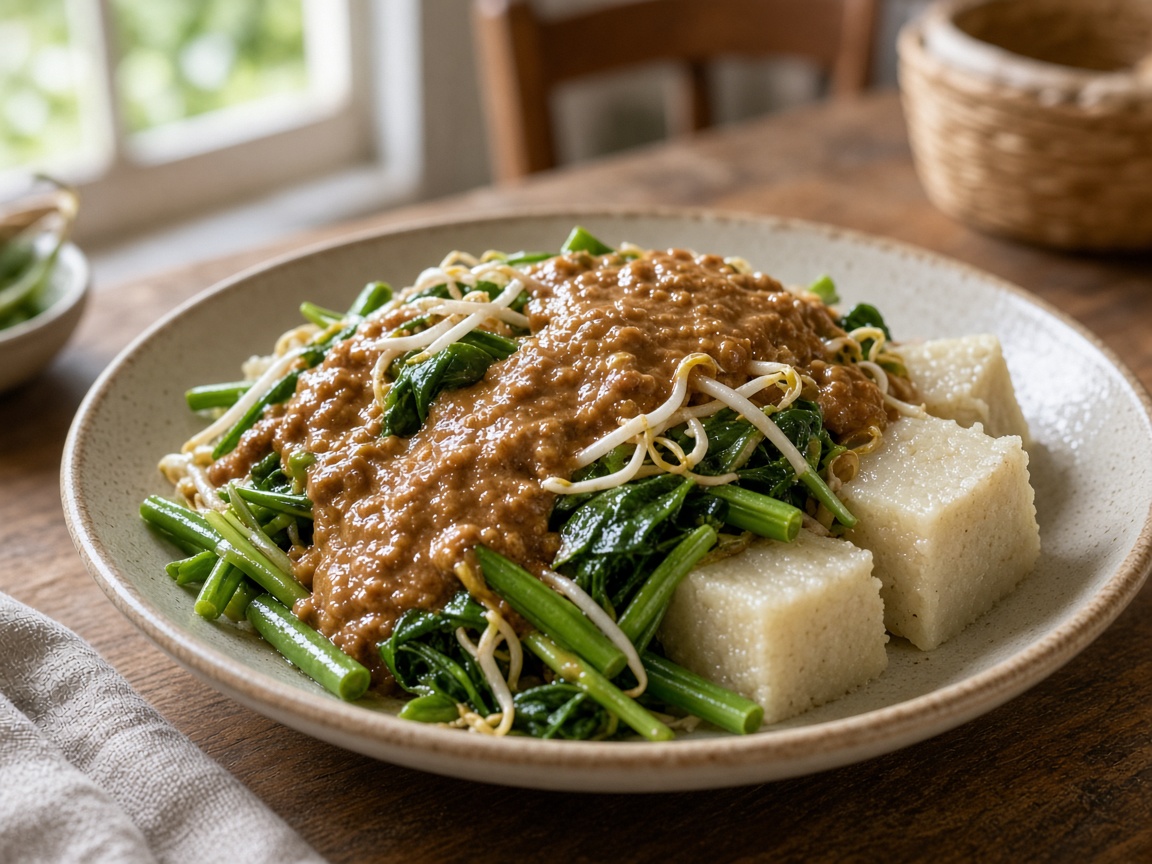
Pecel Madiun is East Java’s peanut-sauce vegetable plate, often associated with fragrant, slightly sweet pecel spice and toppings like krupuk puli and rempeyek.
Compared with gado-gado, pecel leans more on blanched greens and herbs, with cassava leaves as a regional touch when available.
Cook cassava leaves thoroughly; undercooked ones can taste bitter and are harder to digest.
Prep & cook time
- Prep20 minutes
- Cook15 minutes
- Total35 minutes
- Servings4 servings
- LevelMedium
Tools you need
- Pot
- Colander
- Blender or bowl for sauce
- Platter
Ingredients
- 150 g long beans, cut and blanched
- 2 cups bean sprouts, blanched
- 2 cups cabbage, shredded and blanched
- 1 bunch Thai basil (kemangi)
- 2 cups cassava leaves, boiled until tender (optional but traditional)
- 150–200 g pecel peanut paste (bumbu pecel) or homemade peanut sauce
- Hot water, to loosen the sauce
- Krupuk puli and rempeyek, for serving
- Salt, to taste
Directions
- Blanch long beans, sprouts, and cabbage separately until tender-crisp. Drain very well.
- Boil cassava leaves until fully tender if using; squeeze out excess water and chop.
- Loosen pecel paste with hot water until thick but pourable. Taste and add salt if needed.
- Arrange the vegetables and basil on a platter.
- Spoon the peanut sauce over the center.
- Top with krupuk puli and rempeyek. Serve with warm rice or lontong.
Kitchen tips
- Buy quality bumbu pecel from a trusted brand if you are short on time.
- Keep herbs raw for fragrance.
- Serve sauce warm or room temperature, not icy cold.
- Offer mild sauce for children and sambal on the side.
Serve with
- Warm rice
- Lontong
- Rempeyek
- Fried tempeh
How to store
Vegetables and sauce keep 2 days separately. Crackers go soft if stored on the dressed plate.
Common mistakes
- Undercooked cassava leaves that taste bitter.
- Watery sauce that pools under the vegetables.
- Dressing too early so herbs wilt and crackers soften.